He left Slovakia as an orphan and became a doctor. In a California orchard, he remembered home.
Raised in Ohio, Štefan Grega became a dentist, built a family, and carried his past with him – until he returned to it.

Štefan Grega (source: David Grega)
Dr David Stephen Grega has spent over 30 years practicing medicine as a physician associate, as well as an educator in health care. He is passionate about writing nonfiction, real life stories, documentaries, and memoires. David has a strong connection with his Slovak heritage through his father.
David’s story is part of a Global Slovakia Project- Slovak Settlers, authored by Zuzana Palovic and Gabriela Bereghazyova. The book is available for purchase via info.globalslovakia@gmail.com.
In August 1936, a 12-year-old boy and his 10-year-old sister, both recently orphaned, left their home in rural Slovakia and began their journey to America. With war clouds gathering in Europe and Adolf Hitler’s ambitions toward Czechoslovakia becoming increasingly ominous, relatives in America initiated adoption papers so that the two siblings might escape their dire prospects.
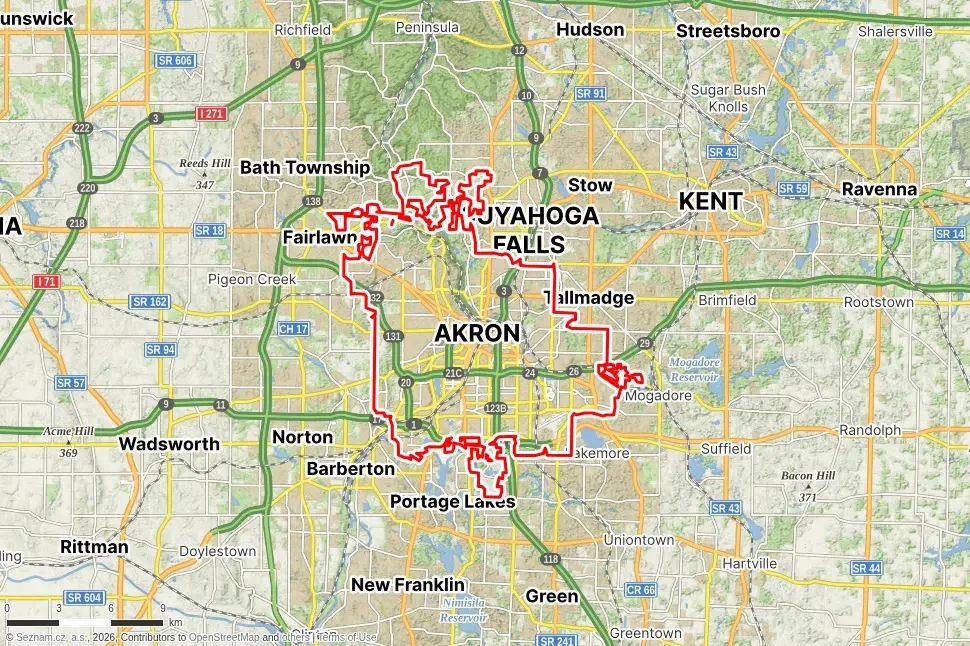
My father, Štefan Grega, and his sister Margita were uprooted from their homeland and bound for their new home in Akron, Ohio. Their Aunt Mary and Uncle Stephen, whom they had never met, would become their new parents and family. One can only imagine the tragic events that led to their departure and the incredible adversity they must have faced — and yet these children were fortunate to have a chance to start anew in America.
It was difficult for my father to talk about his early childhood, and it took me a while to understand why. I would like to share with you the story of his journey, pieced together from memories, documents, and my own trip back to his village in Slovakia.
My father’s mother, Anna Demková Gregová, died during childbirth, along with the baby boy. He vividly remembered the funeral and the two caskets — one large for his mother and one small for his infant brother — both buried together in the cemetery in Uzovce.
His father, Juraj Grega, remarried a young woman who already had children of her own, but just a few short years later, my grandfather tragically died at a young age from pneumonia.
At the age of nine, my father took on the responsibility of trying to keep the family farm going and helping his stepmother care for the younger children. He confided that after his father’s death, “these were some of the darkest days of my life”. Due to these circumstances, it was arranged for my father and his sister Margita to stay with relatives in America. The imminent invasion of Czechoslovakia by Nazi Germany only accelerated the decision.
Leaving Uzovce and heading to Germany by train, my father Štefan and his sister Margita eventually made their way to France, where they were placed on the Queen Mary, bound for the port of New York. Traveling by themselves, with no immediate adult guardian, they were alone on a ship full of strangers. They had little more than a small suitcase with one change of clothes for the long journey.

Arriving in bustling New York City must have been astonishing for such young children. My father remembered eating his first hot dog from a street vendor. From there, they met up with their aunt and uncle and began their new life in Akron, Ohio.
Life in America was not going to be easy. The siblings had to be separated — one going to their aunt’s home and the other to their uncle’s.
Mary and her husband, John Kancir, owned a small grocery store and could use help from a young boy, so they adopted my father. Margita was adopted by Stephen Grega and his wife. Fortunately, they lived within a few miles of each other in Akron. They also attended the same church and grade school, St. John’s Catholic School.
Upon adoption, my father lost his birth name and was given a new one: Stephen Kancir.
Both Stephen and Margita were enrolled in school at a grade level well below their actual level due to the language barrier. This helped them learn English and catch up. My father often spoke about being a 12-year-old seventh grader placed back into the third grade to learn English and enduring the expected struggles and scrutiny from classmates. But he persevered, worked hard, and soon advanced to his proper grade level.
Fortunately, Akron had a well-established Slovak community, allowing them to maintain a strong connection to their homeland. Mary Grega Kancir, my father’s aunt-turned-adoptive mother, was an excellent homemaker and cook who preserved Slovak traditions and recipes. When she later became my grandmother, she would visit us at least once a year. The first time I saw a large quantity of poppy seeds was when she brought packages to make koláče and bobálky.
In addition to school, my father worked in the family grocery store as a stock boy and delivery boy, eventually becoming a cashier. Although he appreciated the business, his aspirations were much greater — he wanted to go to college. However, he needed the approval of his adoptive parents, who preferred that he take over the family business.

(source: Facebook - Uzovce)
At the age of 17, after his junior year in high school, my father entered the U.S. Army during World War II, forcing him to suspend his education while he served honorably for two years. Although he had the aptitude and physical ability to serve in the Marine Corps, his status as a non-citizen prevented it. Only after his Army service was he able to obtain U.S. citizenship. Upon completing his military obligation, he returned to Garfield High School in Akron to finish his senior year and was later accepted to The Ohio State University.
The challenges he faced in childhood forged a determined and courageous individual. He put himself through college and was accepted into dental school at Ohio State. During this time, he re-entered the military as an ROTC officer, using that service to help finance his education.
While in college, he met the love of his life, Phyllis Mattern, whom he married. Together they had four children. He became a respected and compassionate dentist with strong ethical values. He was a role model and a constant source of inspiration to me.
He immersed our family in Slovak traditions, especially during Christmas. Christmas Eve was a deeply meaningful time, centered on family and heritage. Mushroom soup was essential, and one special tradition he shared was the use of oblátky (wafers). He explained that in Slovakia, the father would distribute them with honey, followed by a prayer and blessing before everyone partook. These traditions meant a great deal to me and to my children.
My father often spoke of the Slovak countryside, the distant Tatra Mountains, and sledding on the hills near his village church, where he was baptized and served as an altar boy. He had a strong devotion to the Blessed Virgin Mary and kept her in his prayers.
He loved the agricultural life of rural Slovakia. As a child, he enjoyed walking in the fields and watching the harvest. This is why he took such joy in our backyard in Sacramento, California — his small orchard transported him back to his childhood in Uzovce.
I was just 10 years old in 1967 when my father finally returned to his homeland. It was a long-awaited reunion, made possible after decades due to financial and political barriers. The Iron Curtain divided the countries, and his background as a U.S. military officer raised concerns when applying for a visa.
When he arrived in Czechoslovakia, soldiers informed him they would monitor him throughout his visit. Despite this, returning home after 30 years was one of the most meaningful experiences of his life. He reunited with family, including his half-brother, and visited the graves of his parents and brother.
He had come full circle.

Akron, Ohio (source: Flickr - Ken Lund)
As his only son, I felt a responsibility to carry on the family legacy. My father honored his roots by giving all his children the middle name Grega. He hoped I would one day adopt the name fully.
In 1985, before the birth of my first son, I legally changed my name to David Grega. When I told my father, he was deeply moved. It strengthened my connection to him and to our heritage.
My father passed away in 2006, leaving a profound void. I fulfilled a promise to him by visiting his village in Slovakia with my daughter after she graduated from college.
As we approached Košice International Airport, I felt overwhelmed with emotion. Seeing the Uzovce sign the next day made it all real.
Though I had little prior contact with relatives, we were warmly welcomed. We shared meals, stories, and photographs. One of the most powerful moments was visiting the church where my father had been baptized. The caretaker recognized our family name and connected us with locals who remembered my grandfather.
As a firefighter and paramedic, I was especially moved to learn that my grandfather had been the village fire chief. It felt like a meaningful connection across generations.
As we left the church, a sudden thunderstorm erupted and then quickly passed. We felt it was a sign that my father — and perhaps my grandfather — was with us.
My Slovak roots remain strong, and I am deeply grateful to my father for sharing his culture, traditions, and story. We continue to honor our heritage and remain connected to our ancestral homeland for generations to come.


Comments