May 8 in Slovakia: Remembering Victory, Reflecting on History
Each year on May 8, Slovakia marks the Day of Victory over Fascism. It is a public holiday, but not one defined by celebration alone. Across the country, people gather at memorials, lay wreaths, and pause in quiet remembrance. The date marks the end of World War II in Europe, but it also invites a deeper reflection on what that “end” truly meant for the country and its people.

The Road to Victory
When World War II began on September 1, 1939, with the German invasion of Poland, it set off a chain of events that would engulf much of the world. In its early years, Nazi Germany advanced rapidly, defeating one country after another.
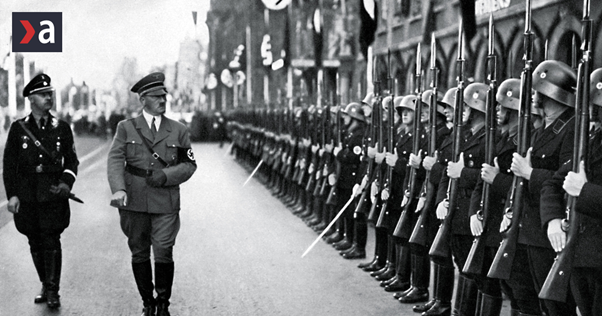
Czechoslovakia is often described as one of the first victims of this expansion. It disappeared from the map: the Czech lands were occupied directly, while Slovakia declared independence. In reality, however, it became a client state of Nazi Germany, a complex and painful chapter in Slovak history.
At the time, it was far from certain that freedom would prevail.
The turning point came gradually. In the winter of 1941–1942, German forces were stopped near Moscow, offering the first real sign that the war might not end in total defeat for the Allies. The shift became undeniable after the Battle of Stalingrad in 1943, followed by the Battle of Kursk, the largest tank battle in history. From then on, German forces were increasingly pushed back.
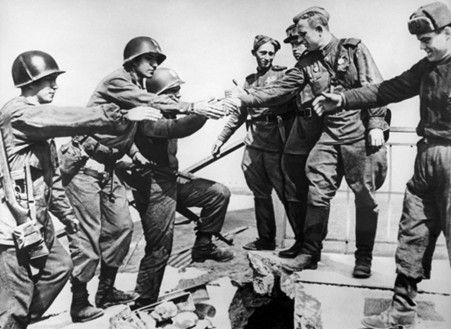
Meanwhile, Western Allied troops advanced through North Africa and Italy. The D-Day landings in Normandy in June 1944 opened a new front in Western Europe, accelerating the collapse of Nazi Germany.
By the spring of 1945, the war in Europe was nearing its end. Berlin fell on May 2. Germany signed its surrender days later, and fighting officially ceased on May 8.
Yet even in that moment, the war was not entirely over, the conflict would continue in the Pacific until September 1945.
Why May 8—or May 9?
The end of the war in Europe is remembered on different dates depending on where you are. In much of Central and Western Europe, including Slovakia, it is commemorated on May 8. In Russia and several former Soviet states, it is May 9.

This difference comes down to timing. Germany signed its surrender on May 7, 1945, with the ceasefire taking effect late on May 8 (Central European Time). In Moscow, however, it was already past midnight - May 9. A second signing ceremony in Berlin during the night of May 8–9 further cemented both dates in historical memory.
For decades, former Czechoslovakia observed May 9. After the political changes of the late 20th century, Slovakia shifted its official commemoration to May 8, a change formalized in 2006. In essence, both dates mark the same moment - the end of the war in Europe, viewed from different historical and geographical perspectives.
The Impact on Slovakia
For much of the war, daily life in Slovakia could feel distant from the front lines. The country’s economy was tied to German war production, and for many people the conflict was experienced indirectly—through radio reports, newspapers, or the absence of loved ones sent to fight.
Yet this distance did not apply to everyone. Slovakia’s Jewish population faced persecution from the very beginning, culminating in the deportation and murder of around 60,000 people during the Holocaust, one of the darkest chapters in the nation’s history.

There was also resistance. The Slovak National Uprising in 1944 stands as a powerful reminder that many refused to accept the regime and its alignment with Nazi Germany.
As the war drew to a close, it arrived with full force. Air raids struck cities such as Bratislava and Prešov. Industrial areas became targets. Retreating German forces systematically destroyed infrastructure, factories, railways, and bridges, to slow the advancing armies. In some places, entire railway lines were torn apart as troops withdrew.

The scale of destruction was immense. Total damages reached an estimated 114 billion Czechoslovak crowns, more than thirty times the state’s wartime budget.

But beyond material losses, the human toll was profound. Around 2,500 Slovak soldiers died on the Eastern Front. Tens of thousands of soldiers of various nationalities were killed in battles fought on Slovak territory. Approximately 60,000 Soviet soldiers alone lost their lives during the liberation of Slovakia. In total, around 120,000 foreign soldiers are buried in Slovak soil.
Civilian losses are harder to quantify, but their impact was deeply felt, families displaced, homes destroyed, and communities forever changed.
From War to Reconstruction
The end of the war brought relief, but not a simple return to normal life.
Slovakia rejoined a restored Czechoslovakia as a country marked by loss and destruction. Infrastructure was damaged, industry weakened, and the economy strained. Rebuilding would take years and require not only resources, but also stability.
At the same time, a new political reality was taking shape. Czechoslovakia gradually came under Soviet influence, setting the course for the decades that followed.

But on May 8, 1945, those future developments were still unknown. For many, the day meant something immediate and deeply human: the fighting had stopped, and the war in Europe was finally over.
A Day of Remembrance
In 2004, the United Nations General Assembly declared May 8 and May 9 as Days of Remembrance and Reconciliation, honoring all victims of World War II.
In Slovakia, May 8 carries both meanings - victory and loss. It commemorates the defeat of fascism, but also reminds us of the cost at which that victory came.
It is, above all, a day of memory, and of responsibility to remember.


Comments